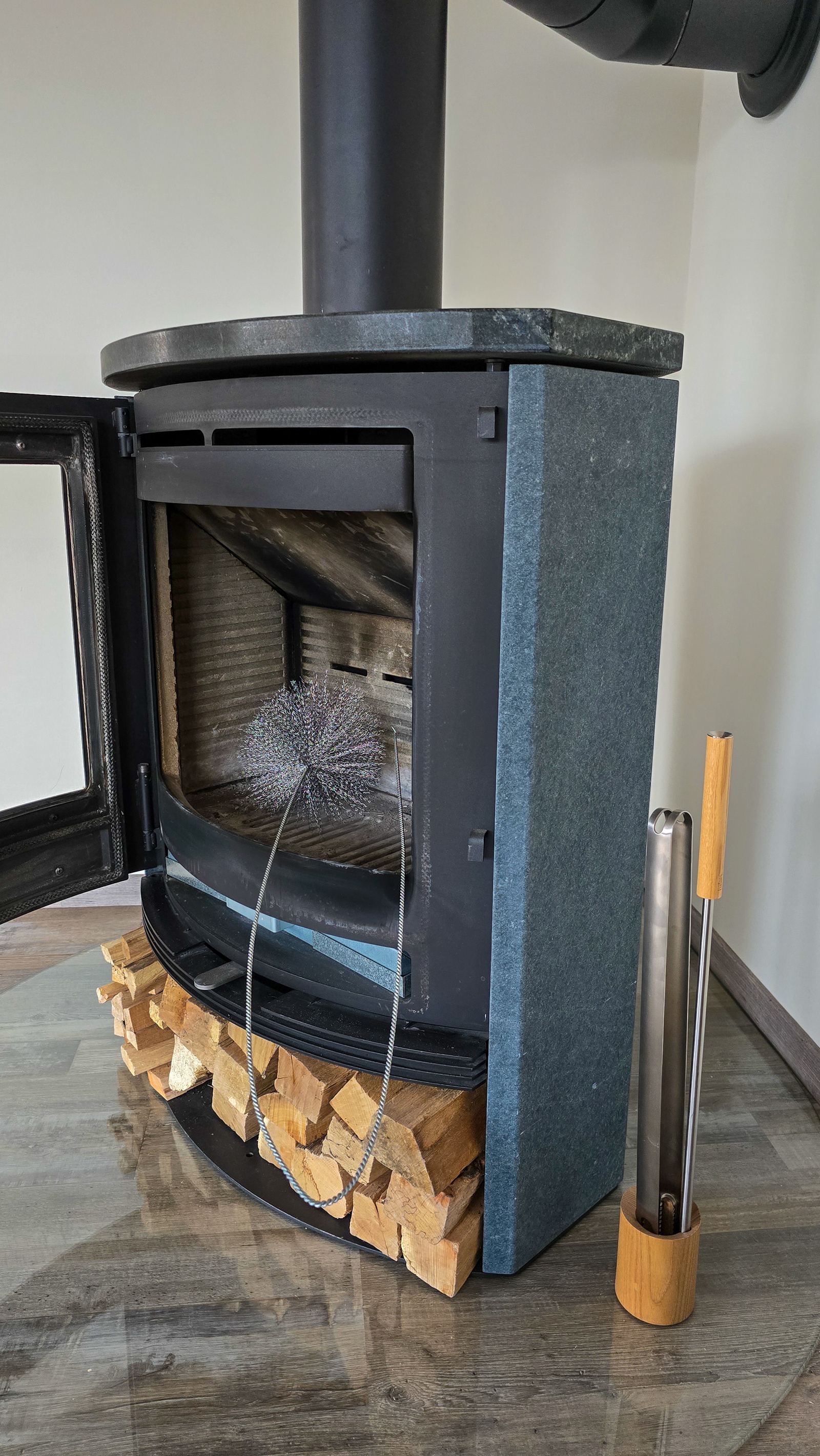
Wood stove installation covers the whole system: a stove that carries a recognized safety listing, a properly rated hearth pad, correct clearances to walls and combustibles, and a chimney or liner matched to the stove's flue outlet — plus the paperwork insurers ask for. One free call to (888) 650-3035 connects you with a certified local installer.
It starts with a site visit, not a sales sheet. The installer measures the room, checks the floor structure, and maps clearances to walls, mantels, and furniture using the stove manufacturer's manual — every listed stove publishes its own tested clearance and hearth requirements, and NFPA 211 governs situations the manual does not cover. The venting plan comes next: an existing masonry chimney usually gets a stainless steel liner sized to the stove's flue collar, while a new location may call for a factory-built chimney run through the roof. Flue size matters because a stove drafts as designed only when the chimney matches its outlet — an oversized old flue cools the smoke and hurts performance.
On installation day, the hearth pad goes in first — sized and rated to the stove's requirements for ember protection and, where specified, thermal insulation. The stove is set, connector pipe is assembled in the correct orientation and secured at each joint, and the liner or chimney sections are installed, insulated where required, and capped. A good installer pulls the local permit and schedules the inspection where your jurisdiction requires one. Before the installer leaves, ask for the documentation packet: the stove's listing label photographed in place, the manual, the permit sign-off, and photos of clearances and the finished venting. Homeowner insurers commonly ask for exactly this when you notify them a wood stove was added.
A wood stove connected straight into a large, unlined masonry fireplace flue — sometimes called a slammer install — is a classic problem in older homes. The flue is far bigger than the stove's outlet, so exhaust cools, draft weakens, and creosote condenses quickly on the cold masonry. Modern practice runs a stainless liner sized to the stove collar, ideally insulated, from the stove connection all the way to the top of the chimney.
Listed stoves are tested at specific distances from combustibles, and the hearth pad has tested requirements too — not just any tile board. Common shortcuts include setting the stove closer to a wood-framed wall than the manual allows, trusting a decorative brick veneer as protection, or using a pad with no rated insulating value under a stove that requires one. These shortcuts hide quietly until the surrounding materials have baked for a few seasons.
Watch for an installer who declares your existing chimney unusable within minutes and pivots straight to the biggest full-replacement package — without a camera scan, photos, or a written explanation. Sometimes a chimney genuinely cannot be relined, but that conclusion should come with documented evidence you can show another professional. A legitimate assessment tells you what is wrong, where it is, and what the options are, and it survives a second opinion.
These are call-a-professional signs, not panic signs. Stop using the fireplace until it's been looked at, and describe what you're seeing when you call.
In most US jurisdictions, yes — wood stove installations typically require a building or mechanical permit and a final inspection. It is not just red tape: the signed-off permit verifies that clearances and venting were checked against code, and it is a document insurers commonly want to see. A professional installer usually handles the permit process and knows the local requirements, which vary from town to town.
Notify your carrier when a wood stove is added — most ask about solid-fuel appliances anyway. Carriers commonly request proof of professional installation, the stove's listing information, the permit sign-off, and sometimes photos of clearances and the hearth. Providing that packet up front is far easier than explaining an undisclosed stove after a loss. Requirements vary by carrier, so ask yours exactly what documentation it wants.
The stove was engineered and safety-tested around a specific flue diameter. A liner matched to the collar keeps exhaust moving fast and hot, which maintains draft and gives creosote less chance to condense. Vent into a flue much larger than the collar and the smoke slows, cools, and deposits creosote on the walls. Stove manuals state the required size, and installers size the liner to it.
Often, yes — either as an insert designed to fit inside the firebox or as a freestanding stove on the hearth connected into the chimney. Either way, current practice runs a full stainless liner from the stove collar to the chimney top rather than dumping smoke into the old open flue. The installer verifies firebox dimensions, the hearth extension, and chimney condition before recommending which approach fits.
Yes — call (888) 650-3035 and ChimneyBeacon connects you with an independent certified chimney professional handling wood stove installation & service in your area. The referral is free; the local pro schedules and prices the work directly with you.
Honest answer: it depends on what a professional actually finds — access, condition, materials, and scope move every quote. Any firm number invented before someone has seen your chimney is marketing, not pricing. The certified pro quotes after looking, in writing, and our referral adds nothing to it.
Sometimes a low quote is a lean, honest operator — and sometimes it's a teaser that grows an 'emergency' once the crew is on your roof. Judge the quote by what it documents, not what it totals: photos, scope, and materials in writing beat a low number with none of the three.
The pros in our network are independent businesses, and the credentials — CSIA certification, insurance, licensing where applicable — are theirs. Ask directly; good pros expect it and answer without flinching. Our CSIA guide explains exactly what the certification covers and why it matters.
One free call connects you with an independent certified chimney professional in your area.
Call (888) 650-3035 — Free Referral