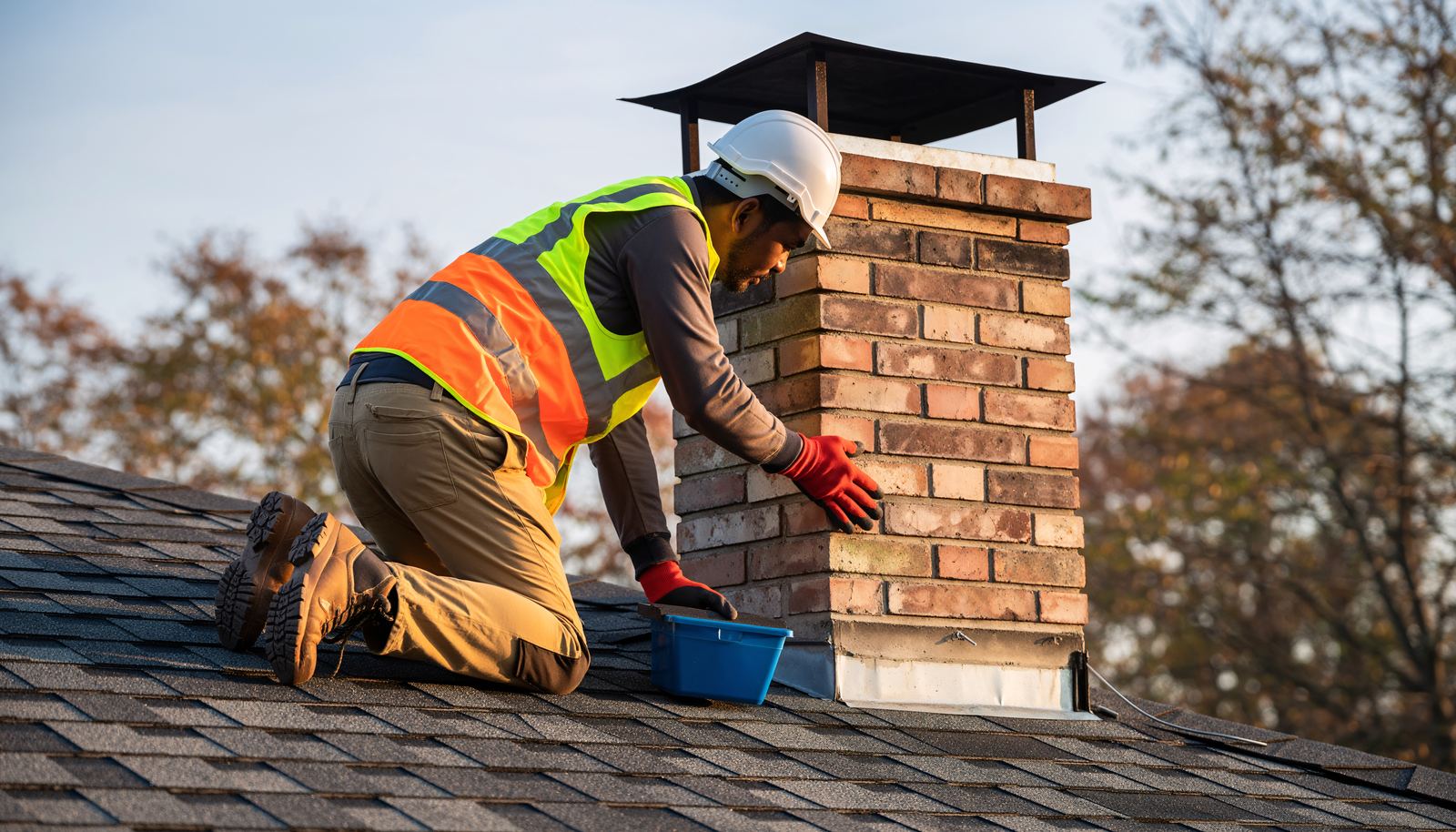
Chimney repair covers the masonry and components that keep the system working: crumbling mortar joints, cracked crowns, spalling brick, damaged fireboxes, dampers, and caps. ChimneyBeacon is a free referral service — one call to (888) 650-3035 connects you with an independent certified chimney professional who can assess what yours actually needs and fix it.
Good repair starts with diagnosis, not a trowel. The pro inspects the chimney top to bottom — with photos you can see — to establish what failed and, just as important, why. Then the work matches the problem. Failed mortar joints get repointed: the deteriorated mortar is ground or raked out to sound depth, and fresh mortar matched to the original in composition and color is packed in. Individual spalled or cracked bricks are cut out and replaced. Crown damage is handled by scale: hairline cracks can be sealed with a flexible crown-repair coating, while a badly broken crown is removed and a new one is formed and poured with proper thickness, slope, and overhang. Expect ladders or roof scaffolding and a day or more of staging for bigger jobs.
Inside the house, firebox repairs use refractory mortar rated for direct flame contact — regular mortar fails there. Worn dampers are often replaced with top-sealing models mounted at the flue exit. Timing matters: mortar and crown materials need suitable temperatures to cure, so masons work around weather, and a pro who explains a seasonal wait is being straight with you. Before anyone leaves, you should have documentation: before-and-after photos of areas you can't see from the ground, a description of the materials used, and the workmanship warranty in writing. If water caused the damage, the repair plan should say how the water is being stopped, not just how the symptom is being patched.
Real repointing means grinding or raking the failed mortar out to sound depth before packing in new material. The shortcut version smears fresh mortar over the crumbling joints without removing anything — it photographs well and fails fast, because the new mortar has nothing solid to bond to. Ask how deep the joints will be cut, and ask for photos of the raked-out joints before the new mortar goes in. A pro doing it right will happily show you.
The crown — the sloped cement top that sheds water away from the flue — causes an outsized share of chimney damage when it cracks, and it gets shortchanged in two directions. One is ignoring it entirely while repairing the symptoms below. The other is brushing a thin coat of sealer over a crown that's structurally broken and calling it fixed. A cracked-through or crumbling crown needs to be rebuilt with proper thickness, slope, and overhang, not painted.
The scare version goes: 'this whole chimney is unstable and could come down' — delivered for damage that's actually localized repointing or a top-course rebuild. Structural urgency is sometimes real, which is exactly why the claim needs evidence: close-up photos of your chimney showing the specific failures, a diagnosis tied to what's visible, and a scope that matches it. If the recommendation is demolition but the photos show weathered joints, get a second opinion before signing anything.
These are call-a-professional signs, not panic signs. Stop using the fireplace until it's been looked at, and describe what you're seeing when you call.
In everyday use the words get swapped freely, and most pros will know what you mean either way. Strictly speaking, repointing is the repair: removing deteriorated mortar and packing in new. Tuckpointing is a decorative variation using two mortar colors to create a crisp, fine joint line. When you're comparing proposals, look past the label to the method — how deep the old mortar comes out, and how the new mortar is matched.
Sometimes, with limits. Mortar and crown materials need adequate temperatures to cure properly, and freezing weather during cure ruins the work. Pros can use cold-weather methods within reason — tenting, heated enclosures, admixtures — but there's a point where honest masons say 'wait for spring.' A contractor who postpones for weather is protecting your repair. Emergency stabilization and interior work, like firebox or damper repairs, can usually proceed in any season.
A conscientious mason gets close — matching brick size, color, and texture, and blending mortar tint to the weathered original rather than to fresh-from-the-bag gray. A perfect invisible match is rare on older chimneys, since the originals may no longer be manufactured and decades of weathering can't be replicated overnight. New work typically blends in as it weathers. Ask to see a sample brick and a mortar blend before the work starts.
They sit together at the top and get confused constantly. The crown is the sloped cement or concrete slab that tops the masonry and sheds rain away from the brick. The cap is the metal hood with mesh that covers the flue opening itself, keeping out rain, animals, and debris while letting smoke exit. They fail differently and are repaired differently — a cracked crown is a masonry job; a missing cap is usually a straightforward install.
Yes — call (888) 650-3035 and ChimneyBeacon connects you with an independent certified chimney professional handling chimney repair in your area. The referral is free; the local pro schedules and prices the work directly with you.
Honest answer: it depends on what a professional actually finds — access, condition, materials, and scope move every quote. Any firm number invented before someone has seen your chimney is marketing, not pricing. The certified pro quotes after looking, in writing, and our referral adds nothing to it.
Sometimes a low quote is a lean, honest operator — and sometimes it's a teaser that grows an 'emergency' once the crew is on your roof. Judge the quote by what it documents, not what it totals: photos, scope, and materials in writing beat a low number with none of the three.
The pros in our network are independent businesses, and the credentials — CSIA certification, insurance, licensing where applicable — are theirs. Ask directly; good pros expect it and answer without flinching. Our CSIA guide explains exactly what the certification covers and why it matters.
One free call connects you with an independent certified chimney professional in your area.
Call (888) 650-3035 — Free Referral