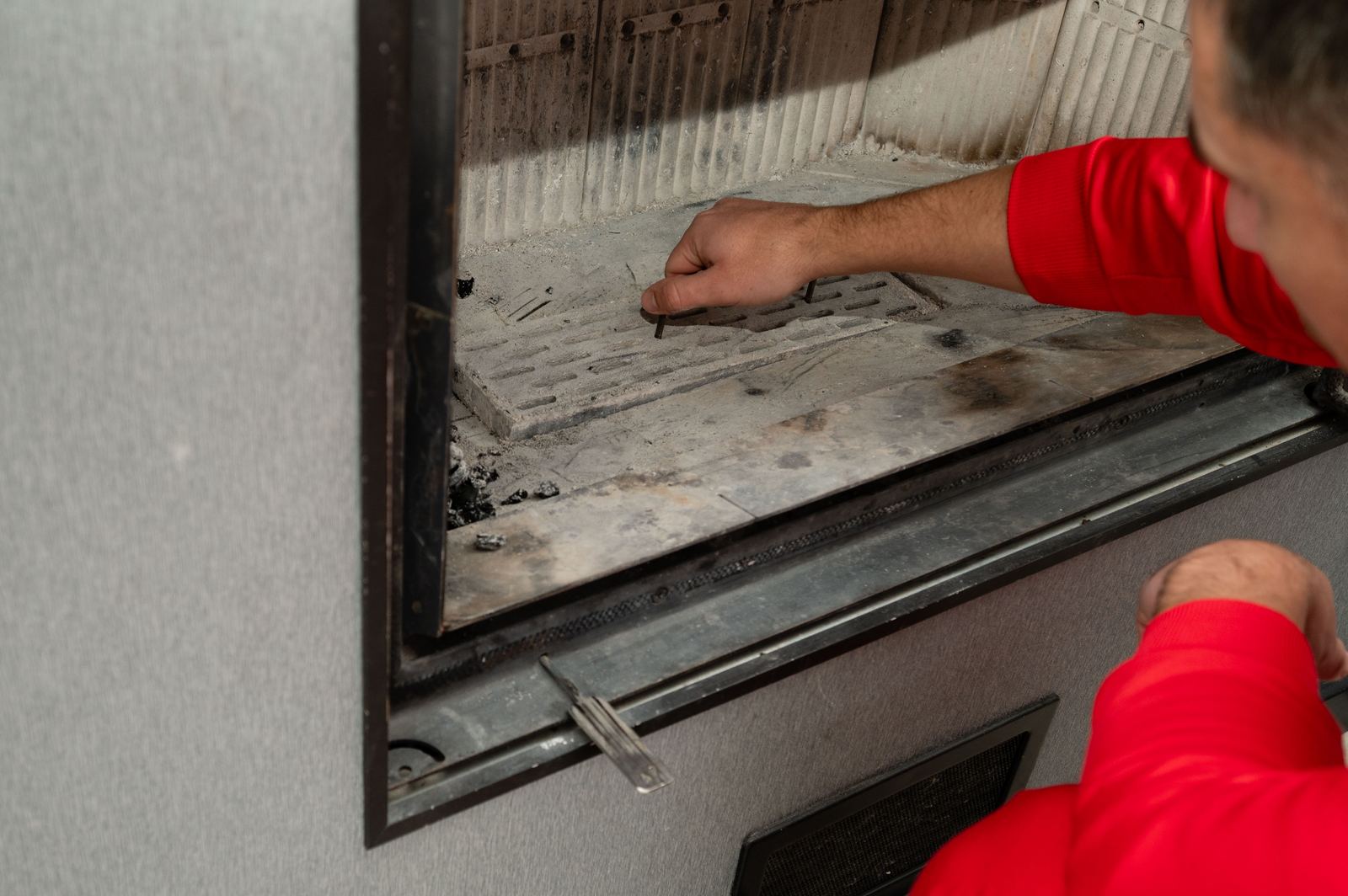
Smoke chamber parging smooths the rough, stepped area above your firebox with refractory mortar so smoke flows cleanly into the flue. It is one of the most common findings on level 2 chimney inspections. One free call to (888) 650-3035 connects you with an independent CSIA-certified chimney professional near you — no obligation, no pressure.
The smoke chamber is the funnel-shaped space between your firebox and the bottom of the flue. In many older chimneys it was built from stepped, or corbeled, brick and never smoothed over. The pro starts by sweeping the chamber and inspecting it — often with a camera — to confirm the surface is rough, cracked, or gapped. NFPA 211 calls for smoke chamber walls to be parged smooth, so the fix is straightforward in concept: the technician applies a refractory, insulating parging mortar over the stepped brick, filling voids and creating a smooth, sealed funnel. Access is usually through the firebox and damper opening, so most of the work happens from inside the house.
Depending on access and the chamber's shape, the pro may trowel the mortar on by hand or use a spray-applied refractory product designed specifically for smoke chambers. Either way, the goal is a continuous coating with no exposed brick joints, rounded transitions, and a smooth path into the flue. The damper often comes out temporarily to make room to work, then gets reinstalled — or replaced, if it is worn. Most jobs take a few hours to a day, followed by a curing period before the fireplace is used again. A good technician documents the finished chamber with photos so you can see the before-and-after for yourself rather than taking anyone's word for it.
Refractory mortar only bonds to clean, sound masonry. If the chamber isn't swept and scrubbed free of creosote and soot first, the coating can release in sheets, and the work has to be redone. The same goes for parging over cracks caused by structural movement — the coating hides them without fixing anything. Ask how the chamber will be prepped, and request photos of the cleaned surface before the mortar goes on.
Smoke chambers see high heat and rapid temperature swings, so the parge coat has to be a refractory, insulating mix made for that service. Ordinary Portland-based mortar or general patching cement can crack and debond under heat cycling, leaving the chamber in worse shape than before. Ask the technician exactly what product they plan to use and confirm it is rated for smoke chambers — reputable pros answer that question happily and specifically.
Be cautious if anyone declares your smoke chamber unsafe without showing you images from inside it, or pairs the finding with sign-today pressure. Parging is a common and legitimate recommendation, but it is a visual diagnosis — no photos, no diagnosis. An honest pro documents the corbeled brick or open joints on camera, explains what NFPA 211 says about smooth chamber walls, and gives you a written finding you can take anywhere for a second opinion.
These are call-a-professional signs, not panic signs. Stop using the fireplace until it's been looked at, and describe what you're seeing when you call.
It's the funnel-shaped space between the firebox and the flue that gathers smoke and directs it upward. Rough, stepped walls create turbulence that slows draft and gives creosote ledges to collect on, and open joints can let heat reach the chimney's structure. NFPA 211 calls for smoke chamber walls to be parged smooth, which is why this finding shows up so often on inspection reports.
Corbeling — stepping each brick course inward — was simply how masons narrowed the wide firebox opening down to the flue, and for a long time nobody smoothed the interior afterward. It wasn't shoddy work by the standards of the day; the standards changed. That's why parging is such a common recommendation on older masonry fireplaces and isn't, by itself, a sign your chimney was badly built.
Refractory parging mortars need to cure before they see fire, and cure times differ by product, coating thickness, temperature, and humidity. Your technician should give you a specific window for the material they used, and many recommend a couple of small, gentle break-in fires before a full evening burn. When in doubt, wait longer — rushing the cure is the easiest way to crack a brand-new coating.
No — they address different sections of the same system. Parging smooths and seals the chamber between the firebox and the base of the flue; a liner serves the vertical flue above it. An inspection sometimes recommends both, since the same age and wear affect the whole chimney, but each should stand on its own evidence. Ask to see photos of each area so you understand what each repair is for.
Yes — call (888) 650-3035 and ChimneyBeacon connects you with an independent certified chimney professional handling smoke chamber parging in your area. The referral is free; the local pro schedules and prices the work directly with you.
Honest answer: it depends on what a professional actually finds — access, condition, materials, and scope move every quote. Any firm number invented before someone has seen your chimney is marketing, not pricing. The certified pro quotes after looking, in writing, and our referral adds nothing to it.
Sometimes a low quote is a lean, honest operator — and sometimes it's a teaser that grows an 'emergency' once the crew is on your roof. Judge the quote by what it documents, not what it totals: photos, scope, and materials in writing beat a low number with none of the three.
The pros in our network are independent businesses, and the credentials — CSIA certification, insurance, licensing where applicable — are theirs. Ask directly; good pros expect it and answer without flinching. Our CSIA guide explains exactly what the certification covers and why it matters.
One free call connects you with an independent certified chimney professional in your area.
Call (888) 650-3035 — Free Referral