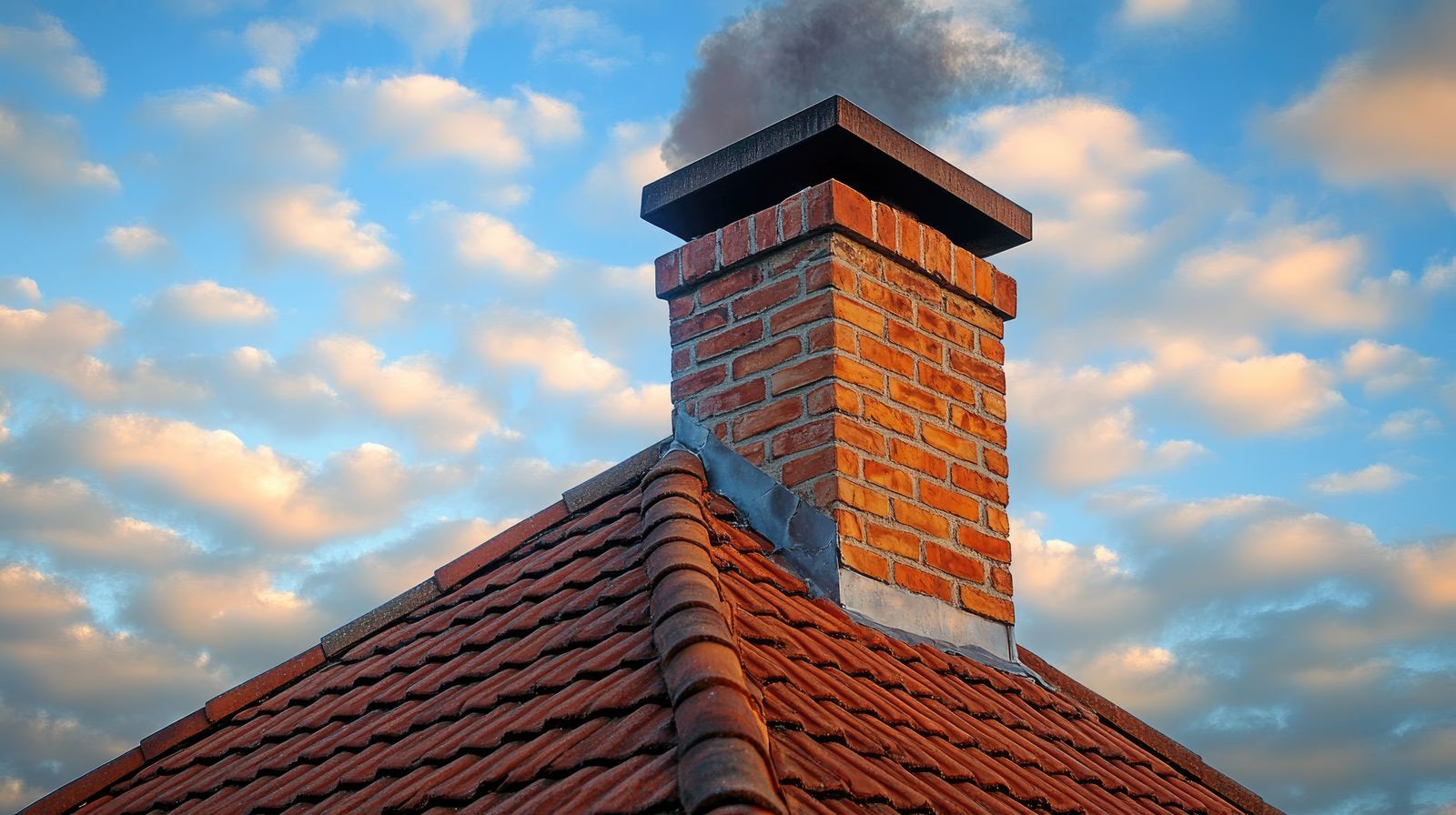
A leaning chimney — visible tilt, a gap opening between chimney and house, or stair-step cracking in the brick — usually traces to footing or soil movement rather than the brick itself. It warrants an in-person structural evaluation, sometimes including an engineer. One free call to (888) 650-3035 connects you with an independent certified chimney professional to start.
The evaluation comes first, and it is mostly measurement. The pro checks the stack for plumb, records how wide any gap between chimney and house is at top and bottom, maps the crack pattern — stair-step cracks that follow the mortar joints usually point to differential settlement — and works out where the movement starts. A lean that begins above the roofline is generally a masonry problem in the stack itself. A lean that runs from the ground up points below grade: an undersized or shallow footing, soil that shrinks and swells with moisture, erosion from a misdirected downspout, or fill that was never compacted. That distinction decides everything that follows, so expect photos, measurements, and dates rather than a snap verdict.
The fix follows the cause. An above-roofline lean is typically handled as a partial rebuild — the tilted courses come down and are relaid straight on sound masonry. A ground-up lean means the footing has to be addressed before any masonry work makes sense, and this is where an honest chimney contractor says plainly that a licensed structural engineer needs to assess the foundation. The engineer specifies the remedy — often helical piers or underpinning to stabilize the footing — a foundation contractor installs it, and the chimney pro then repairs cracks, repoints, and re-ties the stack to the house. When the movement may be old and finished, the first step is often monitoring rather than construction.
Some foundation-repair sales visits jump from one look at a gap to a full underpinning proposal with same-day signing pressure. Piers are a real remedy — for footings that are genuinely failing — but the case should rest on measurements over time or a structural engineer's assessment, not a walk around the driveway. If the recommendation arrives before anyone has established whether the chimney is actively moving, slow the conversation down and get independent eyes on it.
Packing mortar or caulk into stair-step cracks feels like progress, but if the footing is still moving, the cracks reopen — sometimes along new paths, because the filled joints transfer stress elsewhere. Crack repair is the last step of a leaning-chimney fix, not the first. If a proposal for a visibly tilting stack contains no answer to why it tilts, the plan is treating the symptom and leaving the cause in the ground.
Steel straps and brackets that tie a leaning chimney back to the house framing have a legitimate role as temporary stabilization, but they are sometimes sold as the whole fix. A brace doesn't stop a failing footing from settling; it can transfer the chimney's considerable load into framing never designed to carry it, and it can mask progression until movement is severe. Ask what the brace is buying time for — and what the permanent plan is.
These are call-a-professional signs, not panic signs. Stop using the fireplace until it's been looked at, and describe what you're seeing when you call.
Because a masonry chimney usually stands on its own footing, separate from the house foundation — and it concentrates a great deal of weight on a small footprint. If that footing was poured shallow or undersized, or sits on soil that swells and shrinks with moisture, the chimney responds to ground movement before the house does. That's also why fixing the chimney sometimes means fixing what's under it, not the brick you can see.
They're the signature of differential settlement: one part of the masonry dropping relative to another, with the crack following the diagonal path of least resistance along the mortar joints. What matters is width, location, and — above all — change over time. A hairline stair-step crack that has looked the same for years tells a very different story from one that widens season to season, which is why documentation with dates matters so much.
Whenever the cause appears to be below grade, whenever monitoring shows the chimney is actively moving, and always before underpinning or piers are specified. Sizing footings and designing stabilization is licensed engineering work, not chimney work, and an honest chimney pro says so plainly. The healthy division of labor: the engineer diagnoses and designs, a foundation contractor executes, and the chimney professional handles the masonry repairs once the structure is stable.
No — it's how the right fix gets chosen. Crack gauges and dated measurements over several months establish whether movement is historic or active, and that single fact separates a modest masonry repair from a foundation project. Skipping monitoring risks both kinds of mistakes: paying for stabilization a stable chimney never needed, or patching cracks on a stack that's still moving. A pro who proposes monitoring first is protecting you, not stalling.
Yes — call (888) 650-3035 and ChimneyBeacon connects you with an independent certified chimney professional handling leaning chimney evaluation in your area. The referral is free; the local pro schedules and prices the work directly with you.
Honest answer: it depends on what a professional actually finds — access, condition, materials, and scope move every quote. Any firm number invented before someone has seen your chimney is marketing, not pricing. The certified pro quotes after looking, in writing, and our referral adds nothing to it.
Sometimes a low quote is a lean, honest operator — and sometimes it's a teaser that grows an 'emergency' once the crew is on your roof. Judge the quote by what it documents, not what it totals: photos, scope, and materials in writing beat a low number with none of the three.
The pros in our network are independent businesses, and the credentials — CSIA certification, insurance, licensing where applicable — are theirs. Ask directly; good pros expect it and answer without flinching. Our CSIA guide explains exactly what the certification covers and why it matters.
One free call connects you with an independent certified chimney professional in your area.
Call (888) 650-3035 — Free Referral