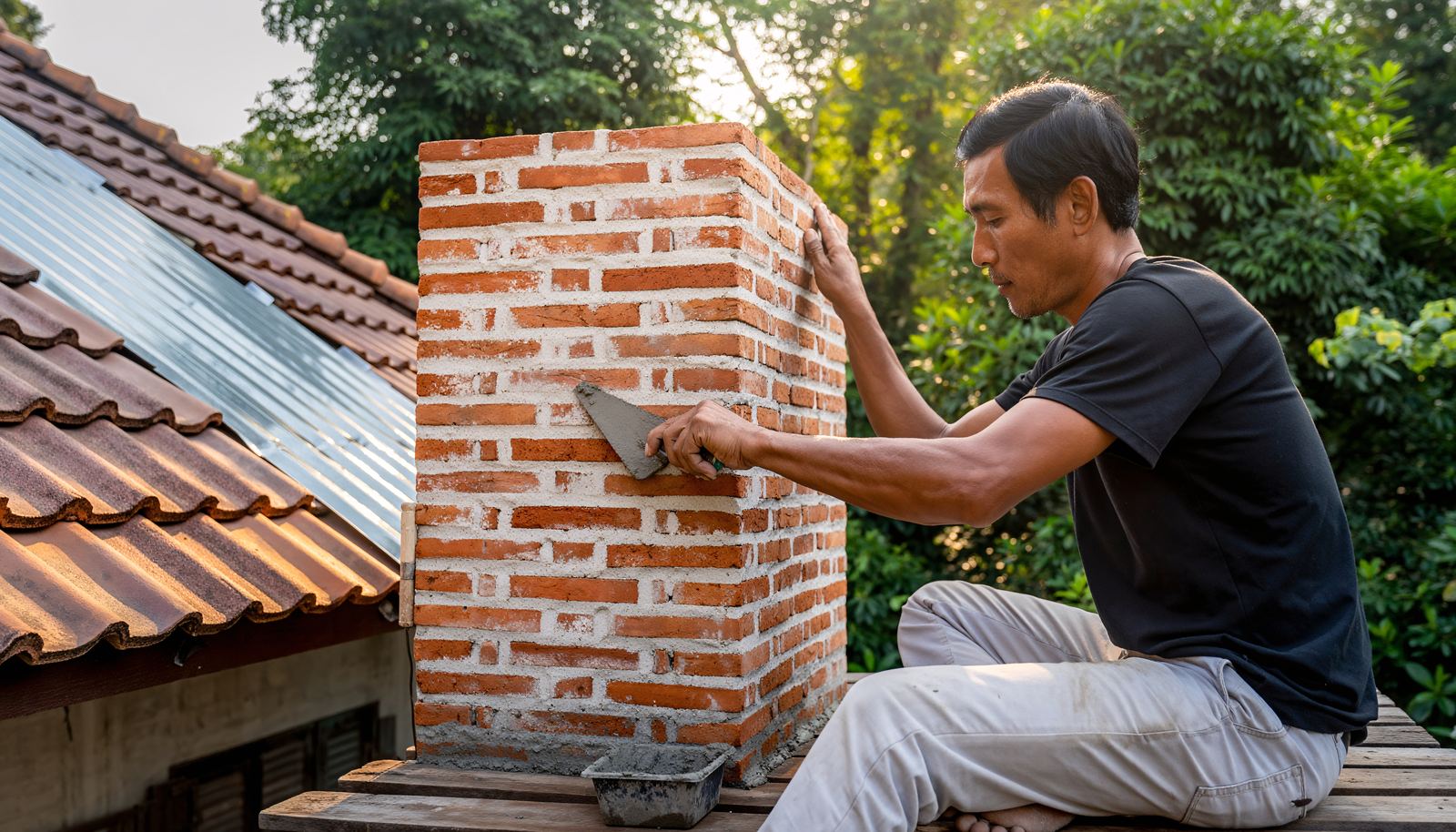
A chimney rebuild takes deteriorated masonry down to sound brick and reconstructs it — sometimes just the top courses and crown, sometimes the entire stack. It's the answer when the brick itself, not just the mortar, has failed. One free call to (888) 650-3035 connects you with an independent CSIA-certified chimney professional who can assess yours in person.
Most rebuilds are partial, and most partial rebuilds start at the roofline, because everything above the roof takes the worst of the weather. The crew sets up roof protection and staging, then takes the stack down brick by brick to the first fully sound course — a line found by probing the masonry, not by guesswork or the original estimate. Usable brick may be cleaned and salvaged; otherwise new brick is matched for size, color, and hardness. The stack is relaid with mortar appropriate to the brick, the flue liner is inspected and kept aligned as the courses rise, and the job is finished with a proper cast crown that overhangs the brick with a drip edge, plus a cap and fresh flashing.
A full rebuild extends the same process further down — to the roofline from inside the attic, or in severe cases all the way to the foundation — and is the answer when deterioration or movement runs the height of the stack. This is a multi-day project with staging, careful demolition, debris removal, and curing time between stages, and the flue liner gets a full evaluation, since NFPA 211 calls for inspection whenever a system is changed. A good contractor photographs each stage: the deteriorated courses coming down, the sound masonry they stopped at, the liner's condition, and the finished crown. Those photos become your record for your own files, future buyers, and any later questions.
A roofer, sider, or storm-chasing contractor glances at your chimney from a ladder and announces the whole thing must come down — today, before something terrible happens — with no close photos of specific failed courses. Real rebuild recommendations are documented brick by brick: which faces have spalled, where cracks run through the units, where the crown has failed. If the urgency arrives before the evidence, get an independent chimney inspection before anything is demolished.
The proposal says rebuild from the roofline, but sound masonry doesn't always begin at the roofline. Relaying new brick on top of courses that are themselves deteriorated builds a good chimney on a bad base, and the failure comes back. The crew should probe downward and stop only at genuinely solid masonry, even if that means more courses than estimated — and should photograph the sound base for you before building upward again.
The crown is the rebuilt chimney's roof, and it's where corner-cutting hides. A thin wash of mortar troweled across the top bricks will crack within a few seasons and readmit the very water that destroyed the old stack. A proper crown is cast concrete, thicker at the center, overhanging the brick with a drip edge, and separated from the flue tile by an expansion gap. Ask which kind is in your scope — in writing.
These are call-a-professional signs, not panic signs. Stop using the fireplace until it's been looked at, and describe what you're seeing when you call.
Because that's where chimneys die first. The portion above the roof is hit by rain, wind, and freeze-thaw cycling from every side with no protection from the house, while the masonry below the roof stays comparatively dry and stable. So it's common to find a badly deteriorated top on an otherwise sound stack — and rebuilding just that exposed section, with a proper crown, addresses the actual damage.
Sometimes. If bricks are structurally sound with intact faces, they can be cleaned of old mortar and relaid, which keeps the chimney's original look. Brick that has spalled, cracked, or absorbed years of water gets replaced. Most partial rebuilds end up as a mix, with the mason sourcing new brick matched for size, color, and — importantly — hardness compatible with the survivors, so the wall weathers evenly.
Not automatically, but the liner always gets evaluated. NFPA 211 calls for inspection when a chimney system is changed, and demolition exposes the liner for a close look. If the tiles are cracked, gapped, or misaligned, relining will be recommended on that evidence; if the liner is sound, it stays. Treat the liner as its own decision with its own photos rather than an assumed line item either way.
You can almost always stay home. A partial rebuild above the roofline commonly runs a couple of days depending on height, access, and weather; full rebuilds take longer and proceed in stages with curing time between them. The fireplace stays out of service during the work and through the mortar's cure afterward — your contractor gives the green light for the first fire, and it's worth waiting for.
Yes — call (888) 650-3035 and ChimneyBeacon connects you with an independent certified chimney professional handling chimney rebuilds (partial & full) in your area. The referral is free; the local pro schedules and prices the work directly with you.
Honest answer: it depends on what a professional actually finds — access, condition, materials, and scope move every quote. Any firm number invented before someone has seen your chimney is marketing, not pricing. The certified pro quotes after looking, in writing, and our referral adds nothing to it.
Sometimes a low quote is a lean, honest operator — and sometimes it's a teaser that grows an 'emergency' once the crew is on your roof. Judge the quote by what it documents, not what it totals: photos, scope, and materials in writing beat a low number with none of the three.
The pros in our network are independent businesses, and the credentials — CSIA certification, insurance, licensing where applicable — are theirs. Ask directly; good pros expect it and answer without flinching. Our CSIA guide explains exactly what the certification covers and why it matters.
One free call connects you with an independent certified chimney professional in your area.
Call (888) 650-3035 — Free Referral