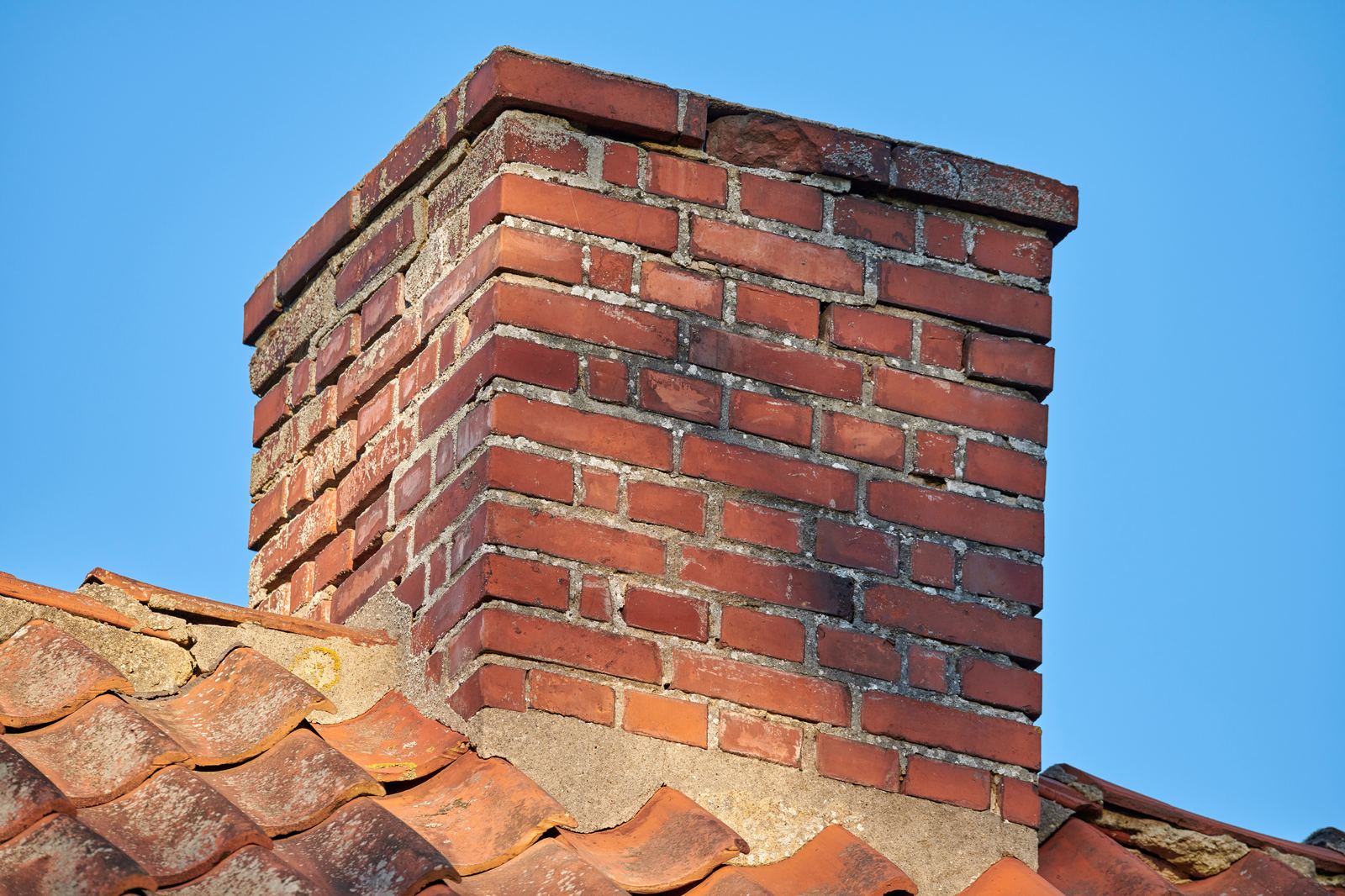
The chimney crown is the concrete slab that sheds water off the top of the stack. Crown repair ranges from sealing hairline cracks with a flexible coating to forming and pouring a new crown. One free call to (888) 650-3035 connects you with a certified local chimney pro who can assess yours.
First the pro gets on the roof and looks at what kind of crown is up there. Many older chimneys were finished with a thin mortar wash rather than a true poured crown, and the repair depends on which one you have and how far the cracking has gone. For hairline cracks in an otherwise solid crown, the fix is a surface repair: the pro cleans the crown down to sound material, fills cracks with a compatible filler, then brushes or trowels on a flexible elastomeric crown coating that stays waterproof as the crown expands and contracts. A bond break is left around the flue tile so the coating does not restrict its movement.
When the crown is broken into sections, badly spalled, or was never more than a mortar smear, coating over it wastes money and a rebuild is the right call. The pro removes the failed crown, builds a form, and pours a new one from a proper concrete mix — not brick mortar — sloped so water runs off, overhanging the brick with a drip edge, and isolated from the flue tile with an expansion joint so it will not crack as the liner heats up. Because all of this happens above your roofline, photos are your proof. Expect clear before-and-after pictures, a note on the method used, and any warranty on the coating or new crown in writing.
A flexible coating can bridge hairline cracks; it cannot hold together a crown that is structurally failing. Coating over through-cracks or loose sections looks fine from the driveway and fails quietly underneath, letting water keep working into the chimney while the warranty clock runs. If a crown has missing chunks or moves when pressed, coating it is a short-term cosmetic. Ask why coating was chosen and what condition the slab underneath is in.
Plenty of failed crowns were 'repaired' with a trowel of brick mortar, which shrinks, cracks, and fails again within a few winters. A crown built to last is poured concrete, sloped to shed water, overhanging the brick with a drip edge, and separated from the flue tile by an expansion joint. If a quote for a new crown does not mention forming, overhang, or the expansion gap, you may be buying the same failure twice.
Because you cannot easily check the crown yourself, it is a common spot for pressure selling: a dramatic close-up photo of a crack, presented as proof the whole top of the chimney must be rebuilt today. Hairline crown cracking is common and often coatable. Ask for wide shots that show the whole crown with something for scale, an explanation of why coating will not work, and time to get a second opinion. A real problem will still be there next week.
These are call-a-professional signs, not panic signs. Stop using the fireplace until it's been looked at, and describe what you're seeing when you call.
They get confused constantly. The crown is the concrete surface that covers the whole top of the masonry stack, shedding water away from the brick. The cap is the metal cover, usually with mesh sides, that sits over the flue opening itself to keep out rain and animals. They fail differently and are repaired differently, and many chimneys eventually need attention to both.
It can. Water entering through crown cracks travels down between the flue and the masonry, and it often shows up far from the source — a stained ceiling, a damp firebox, or a musty smell. But the crown is only one of several common entry points, along with flashing, the cap, and the brick itself, which is why a top-to-bottom look beats guessing from a symptom.
A coating repair is usually a same-day visit: cleaning, crack filling, and application typically take a few hours, plus cure time before the next rain. A full rebuild is more involved — demolition, forming, pouring, and curing — and may take a day or more depending on chimney size and roof access. Weather is the wild card, since both repairs need a dry window.
Cold complicates it. Coatings and concrete both have minimum application temperatures, so in freezing weather a pro may recommend a temporary measure — such as a covering to keep water out — and schedule the permanent repair for a warmer stretch. If a crown fails mid-winter, that staged approach is normal practice, not a runaround. The pro you speak with can lay out the timeline for your climate.
Yes — call (888) 650-3035 and ChimneyBeacon connects you with an independent certified chimney professional handling crown repair & rebuild in your area. The referral is free; the local pro schedules and prices the work directly with you.
Honest answer: it depends on what a professional actually finds — access, condition, materials, and scope move every quote. Any firm number invented before someone has seen your chimney is marketing, not pricing. The certified pro quotes after looking, in writing, and our referral adds nothing to it.
Sometimes a low quote is a lean, honest operator — and sometimes it's a teaser that grows an 'emergency' once the crew is on your roof. Judge the quote by what it documents, not what it totals: photos, scope, and materials in writing beat a low number with none of the three.
The pros in our network are independent businesses, and the credentials — CSIA certification, insurance, licensing where applicable — are theirs. Ask directly; good pros expect it and answer without flinching. Our CSIA guide explains exactly what the certification covers and why it matters.
One free call connects you with an independent certified chimney professional in your area.
Call (888) 650-3035 — Free Referral